Secret #9

In That Day

"You've read those words a hundred times. Do you know when they mean?"

You Have Felt It Before — and You Couldn't Explain It

You have opened your Bible to an Old Testament prophet — Amos, or Ezekiel, or Hosea, or Haggai — and something has stirred inside you. A conviction you couldn't quite name. That these words were speaking to you. To your generation. Not to a king dead 2,700 years. Not to a captive nation whose descendants scattered from the map long before Christ was born.

And then you closed the book, because the surface reading told you otherwise. Amos wrote to ancient Israel in the eighth century before Christ. Ezekiel wrote to Jewish captives on the river Chebar. Hosea prophesied against the northern kingdom of Ephraim. Haggai and Zechariah addressed a handful of returned Jews trying to rebuild a temple. All ancient. All addressed to specific peoples. All — on the surface — done.

But if these prophecies were finished with the ancients, then WHY did God preserve them? Why does the New Testament keep quoting them as still ahead? Why did the angel tell Daniel that his own prophecy was "closed up and sealed till the time of the end"? The Question the Itch is Asking

There is a principle almost no one understands that answers every one of these questions. It is the operating rule God uses across His entire plan. It is what Herbert W. Armstrong called the principle of duality — the fact that God does everything in two stages, physical then spiritual, ancient then end-time, type then antitype. Once you see the pattern, every Old Testament prophet you have ever half-read reopens at once.

And the payoff is staggering. According to Mr. Armstrong, writing in The United States and Britain in Bible Prophecy in 1967, some 90 percent of all biblical prophecy pertains not to the ancient nations who received it, but to our generation. Not history. Headlines. And two-thirds of your Bible is prophecy.

"And I heard, but I understood not: then said I, O my Lord, what shall be the end of these things? And he said, Go thy way, Daniel: for the words are closed up and sealed till the time of the end… and none of the wicked shall understand; but the wise shall understand."
Daniel 12:8—10

The Pattern Behind the Itch

God creates in stages. Not in one motion. In two. And that pattern — laid down at the creation of the earth itself — runs all the way through His plan.

Herbert W. Armstrong stated it plainly in Mystery of the Ages: "At this juncture a truth must be explained almost never understood. God creates in a principle of duality. I have compared it to a woman baking a cake. When she takes the cake out of the oven, it is not yet a finished production until she puts the icing on the cake" (Mr. Armstrong, Mystery of the Ages, "Mystery of Angels and Evil Spirits").

The pattern is everywhere once you know to look for it. The physical earth was created first — then the angels were placed on it to finish the work (Genesis 1). Adam was created first, physical, from the dust — then the second Adam, Jesus Christ, spiritual, "a quickening spirit" (1 Corinthians 15:45—46). The physical congregation of Israel was called out first — then the spiritual Church of God (Mystery of the Ages, "Mystery of Israel"). Physical seed of Abraham, then spiritual seed through Christ (Galatians 3:29). Old covenant, then new. Every stage of God's plan in two.

"A duality runs all the way through the plan of God in working out his purpose here below." Herbert W. Armstrong, Mystery of the Ages, "Mystery of Israel"

If duality runs all the way through God's plan — if it governs creation, mankind, Israel, covenant, and Christ Himself — then why should prophecy be the one exception? It isn't.
A cake in two stages — body of the cake beside the finished, iced version

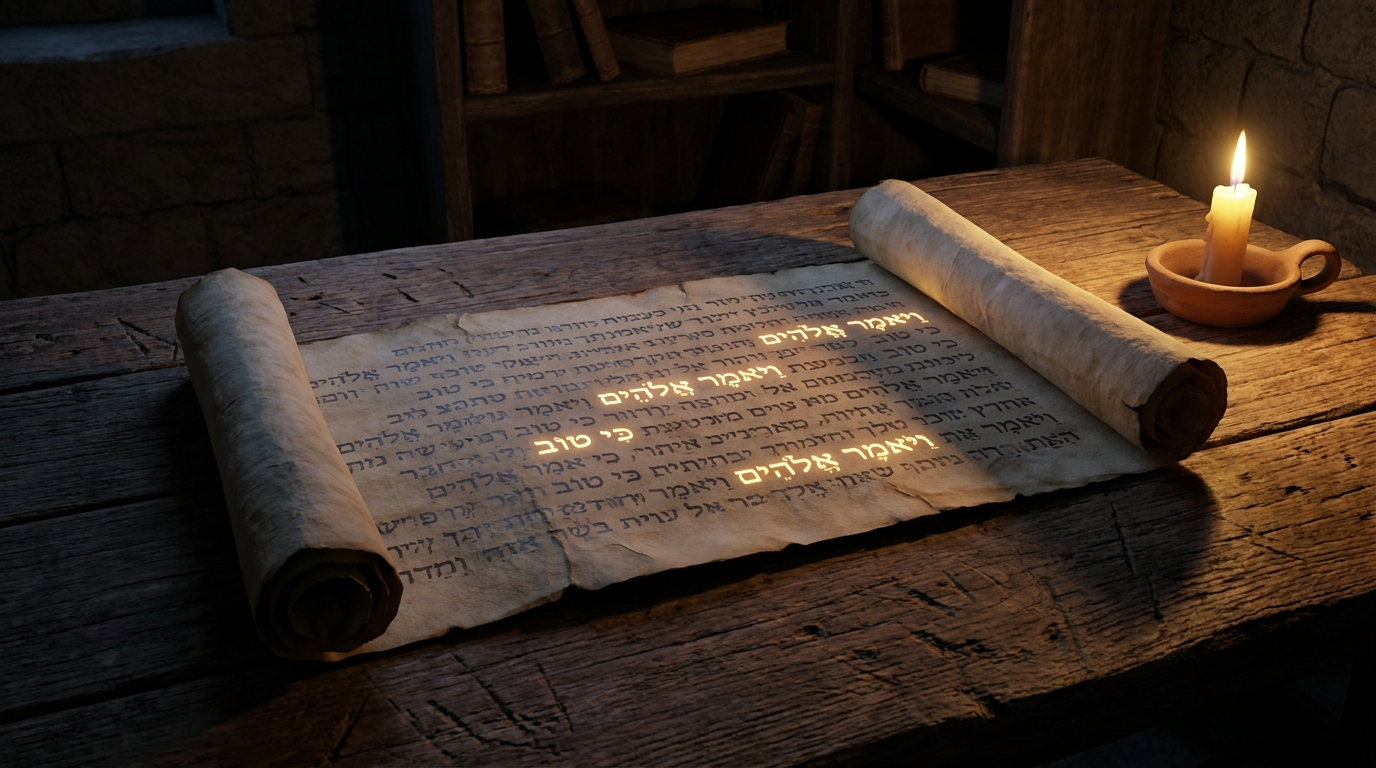
Ancient Hebrew scroll with the phrase ‘in that day’ marked in the margins

The Marker You Can Find Today

The duality principle is not abstract. God left a phrase in the prophets — visible on the page — that flags the second fulfillment every time it appears.

The phrase is "in that day". And it recurs across the prophets with the force of a signature. Gerald Flurry put it this way in his booklet on the post-exilic prophet Haggai: "The book of Haggai is primarily for the end time. 'In that day' (Haggai 2:23) always refers to the latter days. This book is for us today, and it's time we heeded the message" (Gerald Flurry, Haggai — God Has Begun to Shake the Nations, Chapter 1).

The same phrase governs Hosea. "'And in that day will I make a covenant for them with the beasts of the field…' (Hosea 2:18). In that day always refers to this end time. Hosea is clearly an end-time message" (Mr. Flurry, Hosea — Reaping the Whirlwind, Chapter 1). Ezekiel, the same. Amos, the same. Micah, the same. Isaiah, the same. The prophets who received the message in the ancient world recorded it — but they did not primarily deliver it. It was preserved for another delivery, in another day, to another people.

"Hosea, like all of the minor and major prophets, primarily focuses on the end time… The message delivered anciently was only a type." Gerald Flurry, Hosea — Reaping the Whirlwind, Chapter 1

Try this on your next read-through: open any Old Testament prophet and mark every occurrence of "in that day" and "in the last days". You will not have to look for long. When you find the phrase, ask the question the phrase was written to force: what day is that?

Duality in Prophecy — Proved Three Times Over

The duality principle is not something to be taken on assertion. It is something to be tested against the record of scripture and the record of history. Here are three cases — each one a prophecy that had one ancient fulfillment and a second, larger, end-time fulfillment. The third one is unfolding on the front page of every newspaper you read.

Example 01 · Malachi 3:1

John the Baptist — and the End-Time Elijah

Malachi 3:1 promised a messenger who would prepare the way before the Lord. The Gospels identified John the Baptist as its ancient fulfillment (Matthew 11:14). But Christ Himself, after John's ministry, said "Elias truly shall first come, and restore all things" (Matthew 17:11) — still future tense. Mr. Armstrong drew the pattern out: "Both of these prophecies have a dual application… Understand the duality principle here. These prophecies refer to a type and its fulfillment" (Mystery of the Ages, Author's Statement).

Example 02 · Zechariah 4:9

Zerubbabel — and Mr. Armstrong

"The hands of Zerubbabel have laid the foundation of this house; his hands shall also finish it" (Zechariah 4:9). Zerubbabel physically laid and finished the second temple after the Babylonian captivity. Mr. Flurry identifies Herbert W. Armstrong as the end-time antitype — the man whose hands laid the foundation of the spiritual temple, the Church, and finished it. When it was finished, on January 16, 1986, he died (Gerald Flurry, Zechariah — The Sign of Christ's Imminent Return, "Zerubbabel and Joshua").

Example 03 · Amos 7

Jeroboam II — and Donald Trump

The book of Amos was written during the reign of Jeroboam II, king of Israel in the eighth century before Christ (2 Kings 14). Mr. Flurry identifies the end-time antitype of Jeroboam II as Donald Trump — and identifies the miracle of Amos 7 as the miracle of Mr. Trump's second presidency. "By him Jacob shall arise: for he is small" (Amos 7:2, 5). This is not an example you read about. This is an example you are living through (Gerald Flurry, America Under Attack).

The Apostle Paul Wrote for OUR Day

The duality principle does not stop at the last page of the Old Testament. The New Testament prophecies work the same way. The apostle Paul, writing to the Thessalonians in the middle of the first century, warned of a "day of Christ" that would not come until after a specific sequence of events.

"That day shall not come, except there come a falling away first, and that man of sin be revealed, the son of perdition; who opposeth and exalteth himself above all that is called God… so that he as God sitteth in the temple of God, shewing himself that he is God" (2 Thessalonians 2:3—4). Paul may have believed the day of Christ was imminent in his own generation. The apostasy that he warned of took nearly 1,900 years to unfold in its full form.

Mr. Flurry devotes an entire chapter of Malachi's Message — titled "Man of Sin" — to showing that this passage was preserved for our day, not Paul's. "God's Church has applied 2 Thessalonians 2:3-4 to the world for the most part," he writes. "But it doesn't apply to the world. There is tremendous biblical support to show it applies to God's Church" (Gerald Flurry, Malachi's Message to God's Church Today, chapter "Man of Sin"). The "man of sin" sits "in the temple of God" (verse 4) — not in Rome, not in Washington. Inside God's Church. And the "falling away" is an entire Church era abandoning the doctrines Mr. Armstrong restored. That is not history. That is the story you are watching unfold. The prophecies of Paul, like the prophecies of Amos and Ezekiel and Haggai, were preserved for our day.

An open scroll of Paul’s letter to the Thessalonians in warm lamplight
90%
Of Prophecy For Our Time
2,600
Years Since Daniel
1,900
Years Since Paul
1986
Mr. Armstrong’s Hands Finished

The Book Was Sealed FOR OUR DAY

Read the angel's words to Daniel again, slowly. "The words are closed up and sealed till the time of the end… and none of the wicked shall understand; but the wise shall understand" (Daniel 12:9—10). If Daniel's own prophecy was sealed to Daniel — if he could not understand what he had just written — then it was sealed to his generation, and it was preserved for another.

In 1967 Mr. Armstrong put the argument into a sentence that has not lost a syllable of its force in the sixty years since. Read it as an engineering claim, not a rhetorical flourish. Then check it against your own Bible — Amos, Ezekiel, Hosea, Haggai, Zechariah, Malachi, Habakkuk, Micah, Isaiah, Daniel — and see whether the fit is not exact.

"The plain truth is, these prophecies were written for our people of our time, and for no previous people or time. They pertain to world conditions of today, and could not have been understood until today … And where does that lead us? To the fact that prophecy generally was written and preserved for our time today! And some 90 percent of all prophecy pertains actually to this latter half of the 20th century." Herbert W. Armstrong, The United States and Britain in Bible Prophecy, Chapter 2 ("Prophecies Closed Until Now!")

Mr. Armstrong wrote those words in 1967. Every year since has confirmed them. The claim was that prophecy was sealed until our time — and the same prophecies that once read like ancient obscurities now read like a foreign-affairs briefing. Germany rising. The United States declining. A church-state combine gathering across Europe. Russia consolidating in the east. A "falling away" tearing through what remains of professing Christianity. This is what the Old Testament prophets saw. And this is the day they were shown.

"Surely the Lord GOD will do nothing, but he revealeth his secret unto his servants the prophets."
Amos 3:7

The Books That Work the Duality Out, Prophet by Prophet

Two books — each a worked example of the duality principle applied to a single prophet in full. Both provided free of charge by the Philadelphia Church of God. Read online, or request a physical copy by mail.

The Lion Has Roared by Gerald Flurry

The Lion Has Roared

by Gerald Flurry

The book of Amos, worked in full. Delivered during the reign of Jeroboam II in the eighth century before Christ — and primarily for our day. Mr. Flurry identifies the end-time antitype of Jeroboam II and shows how the "roaring lion" of Amos 3 is speaking now.

Request Free Book
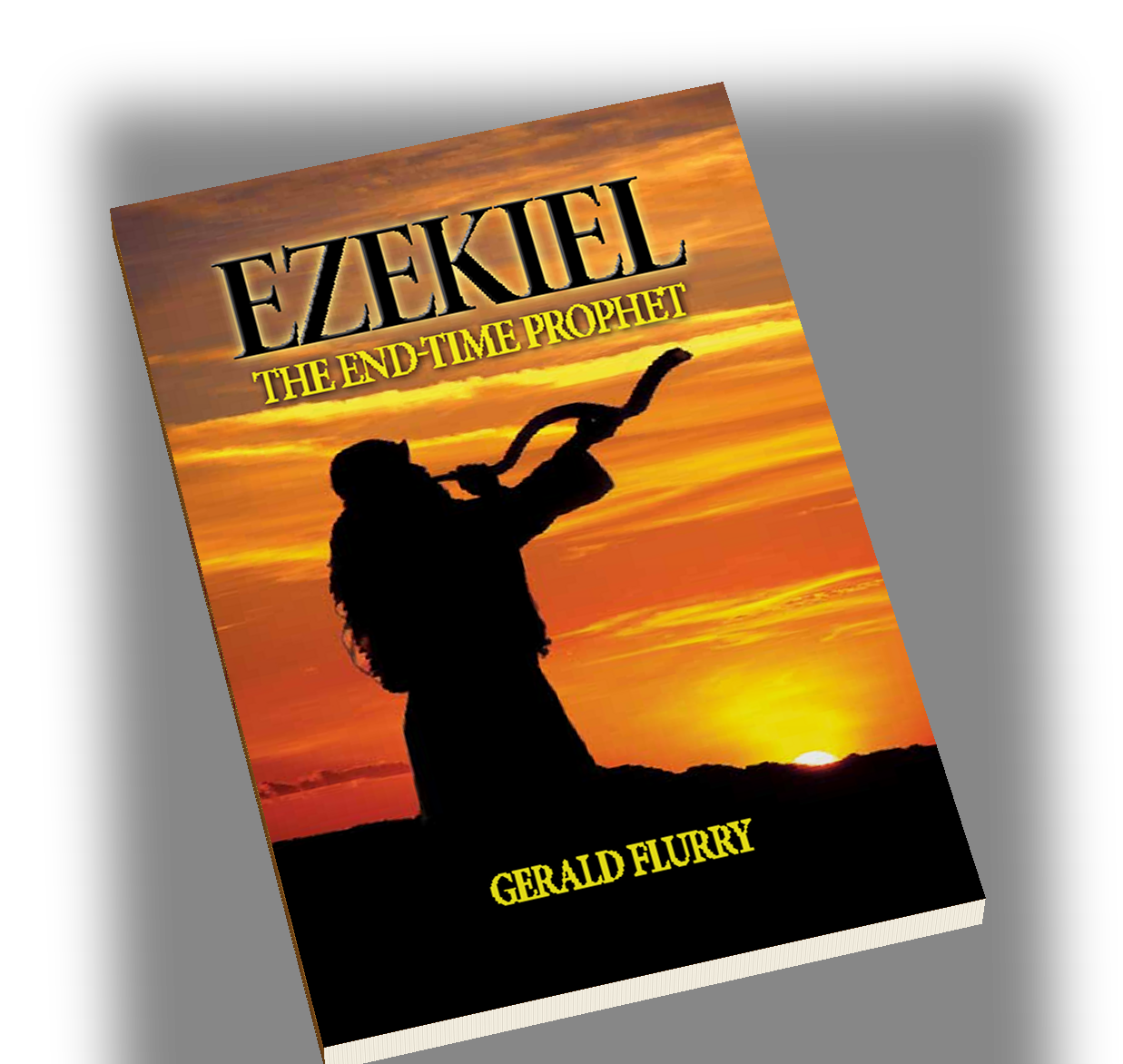
Ezekiel — The End-Time Prophet by Gerald Flurry

Ezekiel — The End-Time Prophet

by Gerald Flurry

Ezekiel prophesied to a "house of Israel" that had already left Palestine before he wrote. He never delivered his message in his own lifetime — he only recorded it. "This prophecy was to be fulfilled in the end time." The clearest single case of the duality principle in the prophets.

Request Free Book

How to Read Your Bible From Here

Do this on your next read-through. Open Amos, or Ezekiel, or Hosea, or Haggai, or Zechariah. Read with a pen in your hand. Mark every occurrence of "in that day", "in the last days", and "the day of the Lord". Do not skip past the phrase — stop at it. Ask the question the phrase was left there to force: what day is that? Whose day? Is this a message the ancient nation received and finished with — or a message God preserved for a second, larger fulfillment in the generation that would inherit the record?

If Mr. Armstrong was right — if some 90 percent of biblical prophecy pertains to our time — then two-thirds of your Bible has been waiting for the reader who knows to ask the second question. That reader can be you. The book was closed for a reason. It has been opened for a reason too.

Download the Full Treatise (PDF)

Every citation, every quotation, every prophet · printable

More Secrets

Dig Deeper

Browse All Secrets →