Secret #3

Christmas Was Not the Day Jesus Christ Was Born

"Then whose day is it? And where does December 25 come from?"

Where Did the Two Great ‘Christian’ Holidays Come From?

My friends, let me be plain with you. Have you ever stopped to ask why you keep the customs you keep? You have been taught since childhood to accept Christmas and Easter as the two chief Christian holidays. You have supposed the Christmas tree, the coloured egg, the sunrise service and the exchange of gifts were all part of the true religion of Jesus Christ.

But where in your Bible did Christ command any of these things? Where did the apostles keep them? Where in the record of the New Testament Church — the one Jesus Christ Himself founded — will you find December 25, or a coloured egg, or an Easter sunrise service, or a Lenten fast of forty days?

“Christmas was not among the earliest festivals of the Church … the first evidence of the feast is from Egypt.” Catholic Encyclopedia, 1911 edition — cited in Herbert W. Armstrong, The Plain Truth About Christmas

Herbert W. Armstrong wrote two short booklets to lay the historical record open before every honest reader: The Plain Truth About Christmas and The Plain Truth About Easter. Neither one asks you to take his word for anything. Every page cites the source: Encyclopedia Britannica, the Catholic Encyclopedia, the Encyclopedia Americana, Alexander Hislop’s The Two Babylons, Austen H. Layard’s Nineveh and Babylon. Look them up yourself. Read them for yourself.

What you will discover is that both festivals were already ancient when the Roman Church absorbed them — Christmas from the Saturnalia of pagan Rome, Easter from the fertility-rites of the Babylonian goddess Ishtar. The truth is on the record. And the record has been in plain view all along.

“Learn not the way of the heathen … for the customs of the people are vain: for one cutteth a tree out of the forest, the work of the hands of the workman, with the axe. They deck it with silver and with gold…”
Jeremiah 10:2—4

Christmas Was Kept for Centuries Before Christ Was Born

December 25 was not chosen because Jesus of Nazareth was born on that date. The Bible nowhere gives His birth date, and the shepherds could not have been in the fields keeping watch by night in the middle of a Judean winter (Luke 2:8).

The 25th of December was already the birthday of the pagan sun god long before it was ever attached to Christ. Mr. Armstrong quotes the Encyclopedia Britannica, 1946 edition: the day was the ancient Mithraic feast of the “birthday of the unconquered sun” — Sol Invictus — and the Roman Church did not order its observance until the fifth century, borrowing the date directly from the pagan festival (The Plain Truth About Christmas, chapter “How This Pagan Custom Got into the Church”).

The real origin, Mr. Armstrong shows, runs deeper still — back to Nimrod, founder of Babylon, and to his mother-wife Semiramis, who “palmed herself off as the wife of the sun god” and became the ancient prototype of the “Mother and Child” worship still painted onto Christmas cards today (Alexander Hislop, The Two Babylons, cited in The Plain Truth About Christmas).


A modern decorated Christmas tree with warm string lights and wrapped presents underneath — the modern practice the pagan Saturnalia origin gave rise to

A wicker basket of pastel-painted eggs, a chocolate Easter bunny, and spring flowers on a wooden table — the fertility iconography of the modern Easter tradition

The Name Itself — Ishtar in Slightly Altered English Spelling

“The name ‘Easter,’ which is the slightly changed English spelling of the name of the ancient Assyrian and Babylonian goddess Ishtar,” Herbert W. Armstrong wrote, “comes to us from old Teutonic mythology…” (The Plain Truth About Easter, opening chapter).

The Phoenician name of the same goddess was Astarte, consort of Baal, the sun god (Austen H. Layard, Nineveh and Babylon, Vol. II, p. 629). Alexander Hislop, in The Two Babylons, page 103, put it plainly: “Easter is nothing else than Astarte, one of the titles of Beltis, the queen of heaven.” Mr. Armstrong opens his booklet with these very citations because the case does not rest on his word — it rests on the record.

In the entire King James Bible, the word “Easter” appears once, in Acts 12:4. Look it up in the Revised Standard, or in any modern scholarly translation: the Greek word behind it is Pascha — Passover. The 1611 translators simply substituted the pagan English name. Every reputable dictionary since has corrected it back.

Inside the Two Booklets

Every Custom. Every Source. Every Date.

Not a page of opinion or human philosophy — every claim proven from the original historical record. Here is a portion of what Mr. Armstrong lays out:

Christmas · 01

December 25 — Birthday of the Sun

The Encyclopedia Britannica, 1946 edition, confirms Dec. 25 was the Mithraic feast of the “birthday of the unconquered SUN” — adopted, not by the apostles, but by the Roman Church in the 5th century (The Plain Truth About Christmas).
Christmas · 02

The Tree in Jeremiah 10

“One cutteth a tree out of the forest … they deck it with silver and with gold” (Jer. 10:2—6). Written seven centuries before Christ — a plain warning against the very custom now called a Christmas tree.

Christmas · 03

Nimrod, Semiramis, and the Child

The “Mother and Child” worship traces from Babylon through Egypt (Isis / Osiris), Asia (Cybele / Deoius) and Rome (Fortuna / Jupiter-puer) — painted onto Christmas cards to this day (Hislop, The Two Babylons).

Easter · 04

Acts 12:4 — the KJV’s Only “Easter”

Hastings’ Dictionary of the Bible: “Easter, used in Authorized Version as the translation of ‘Pascha’ in Acts 12:4 … Revised Standard Version has substituted correctly ‘the Passover.’” A mistranslation, corrected everywhere except the pulpit.

Easter · 05

The Sunrise Service — Ezekiel 8

“About five and twenty men, with … their faces toward the east; and they worshipped the sun toward the east” (Ezek. 8:16). God calls it the “greater abominations” — the identical form of worship millions practice every Easter morning.

Easter · 06

Dyed Eggs & the Forty-Day Lent

“Dyed eggs were sacred Easter offerings in Egypt” (James Bonwick, Egyptian Belief and Modern Thought, pp. 211—212). “The forty days’ abstinence of Lent was directly borrowed from the worshippers of the Babylonian goddess” (Hislop, pp. 104—105).

Herbert W. Armstrong Made the Case in Dated Print

The two booklets on this page were not written by a man selling anything. Mr. Armstrong offered them, and every other publication of his ministry, free of charge for more than five decades.

The Plain Truth About Easter was published in its 1957 edition and revised in 1973. The Plain Truth About Christmas ran in parallel throughout the same period. Both were mailed on request to any reader who asked, at no cost, no obligation, no follow-up — a policy the Philadelphia Church of God continues today at thetrumpet.com.

Behind them stood the Plain Truth magazine, at its peak surpassing a circulation of 8 million copies — greater than Time and Newsweek combined at the time — and the World Tomorrow broadcast on over 400 television stations. When Mr. Armstrong died on January 16, 1986, the ministry his booklets belonged to had reached every corner of the globe.

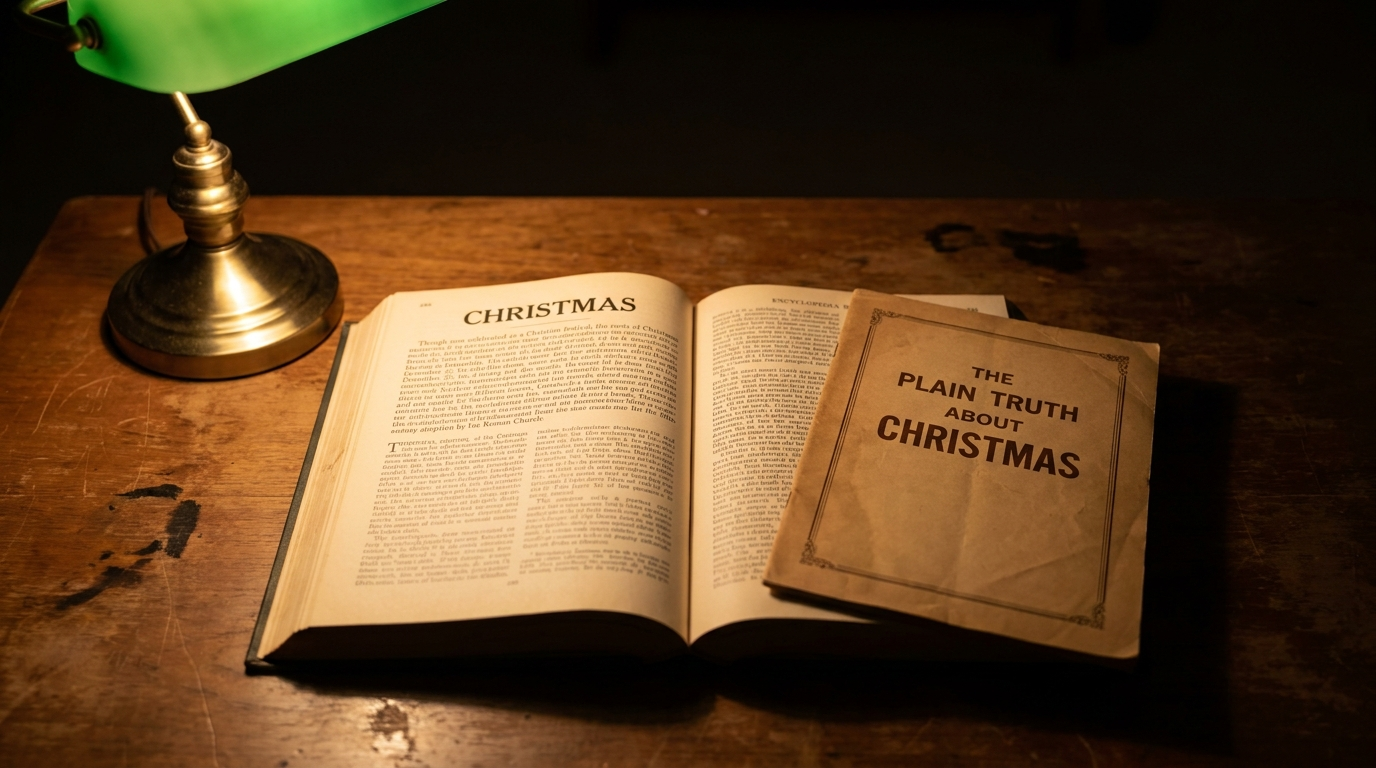
A 1946 Encyclopedia Britannica opened to the entry on CHRISTMAS beside a mid-century The Plain Truth About Christmas booklet — the historical record Mr. Armstrong opens for every reader
1957
Easter Booklet First Ed.
8M+
Plain Truth Circulation
400+
TV Stations
52
Years of Ministry
Small communion cups of wine and pieces of broken unleavened bread beside a lit clay oil lamp — the New Testament Passover memorial Christ Himself instituted

The Memorial Christ Himself Instituted

“God Almighty commanded His people to observe the Passover forever” (Exodus 12:24, cited in The Plain Truth About Easter, chapter “What God Did Command”).

At His last Passover, Jesus Christ did not abolish the ordinance — He changed the emblems, from the blood of a lamb and its roasted body to the bread and the wine (Luke 22:19—20). The apostle Paul confirmed the memorial to the Gentile church at Corinth: “For as often as ye eat this bread, and drink this cup, ye do shew the Lord’s death till he come” (I Corinthians 11:26). Mr. Armstrong shows from Matthew 12:40 — the sign of Jonah — that the crucifixion could not have been on Friday nor the resurrection on Sunday morning: a Wednesday crucifixion and a Saturday-evening resurrection are the only chronology that satisfies “three days and three nights.”

The true memorial is not the pagan Easter sunrise. It is Passover — kept once a year, on the 14th of the first month of the sacred calendar, by Christ, by the apostles, and by the Gentile converts they raised up (Acts 20:6; I Corinthians 5:7—8; 16:8).

“Come out of her, my people, that ye be not partakers of her sins, and that ye receive not of her plagues.”
Revelation 18:4
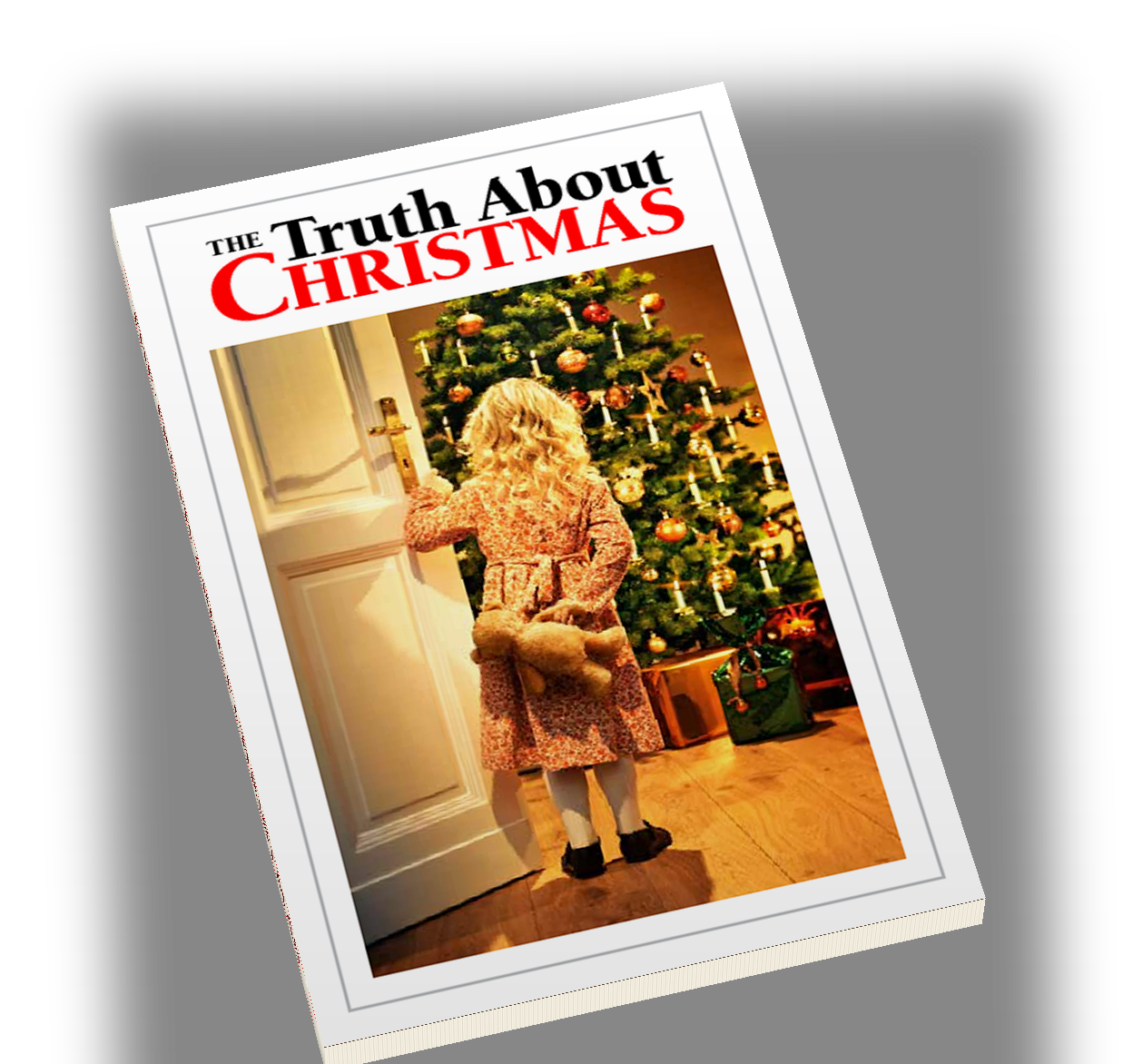
The Plain Truth About Christmas — free booklet from thetrumpet.com Pagan Holidays—or God’s Holy Days—Which? by Herbert W. Armstrong — free booklet

The Plain Truth About Christmas & Pagan Holidays—or God’s Holy Days—Which?

Herbert W. Armstrong opened the entire historical record in two short treatises — every custom, every date, every citation drawn from encyclopedias and dated print you can verify for yourself. Read them with your own Bible in the other hand and settle both questions forever.

Both open the free order page at TheTrumpet.com. No cost. No obligation. Ever.

Test It. Prove It. Do Not Take My Word.

Herbert W. Armstrong never asked any reader to believe him. He asked one thing: open your own Bible. Open the encyclopedia on your shelf. Read Hislop’s Two Babylons. Read Layard’s Nineveh and Babylon. Weigh the record for yourself — because every claim in these two booklets is anchored to a source you can verify.

If Christmas and Easter cannot be found in the New Testament — and they cannot — then the question every honest reader must face is this one: Whose customs, then, are you keeping?

Request Both Free Booklets Now
More Secrets

Dig Deeper

Browse All Secrets →